This page has been idle for a while. To make sure you don't miss out on the latest content, please reload the page.Refresh
Refresh
This page has been idle for a while. To make sure you don't miss out on the latest content, please reload the page.Refresh
Refresh


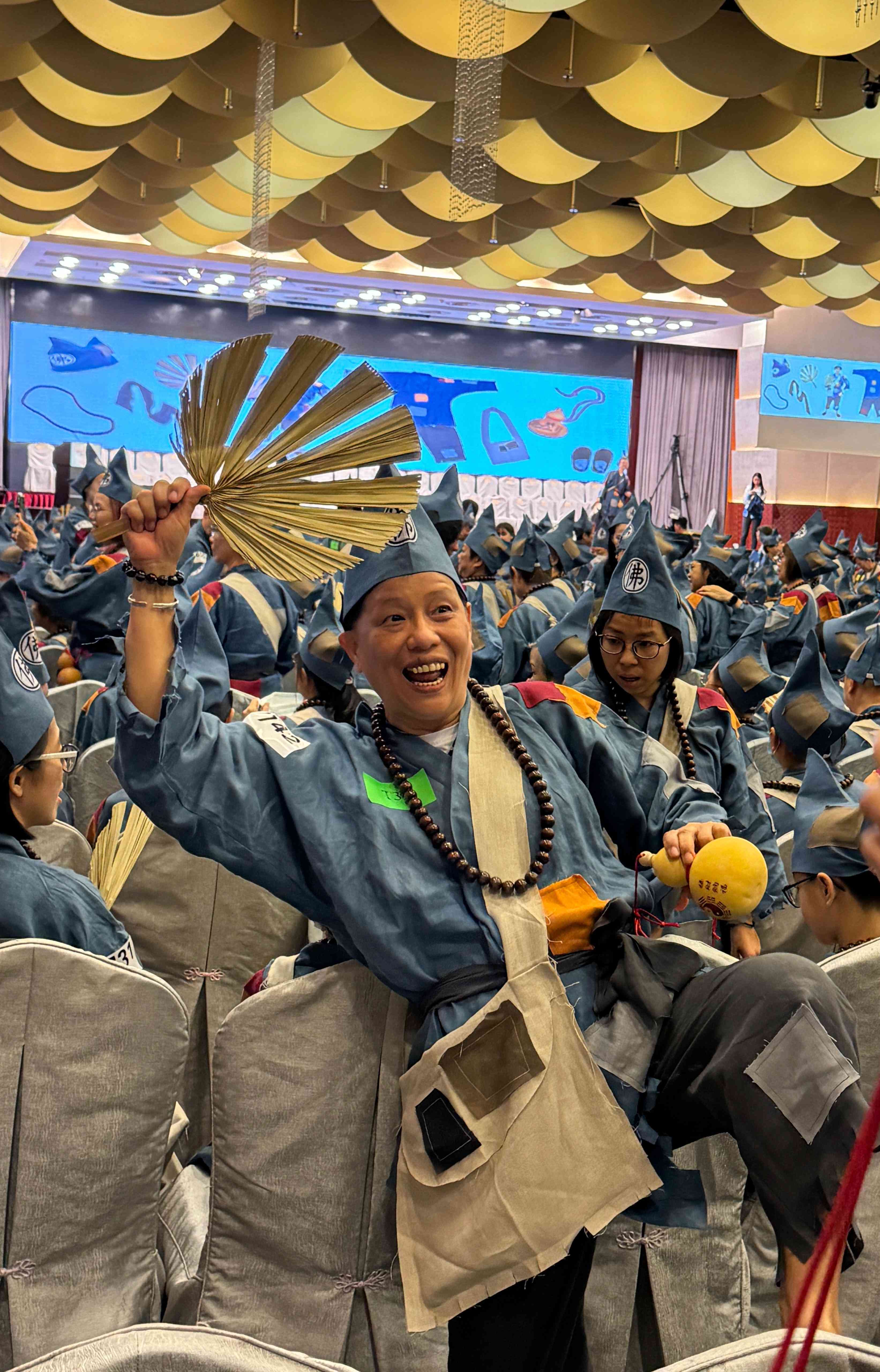
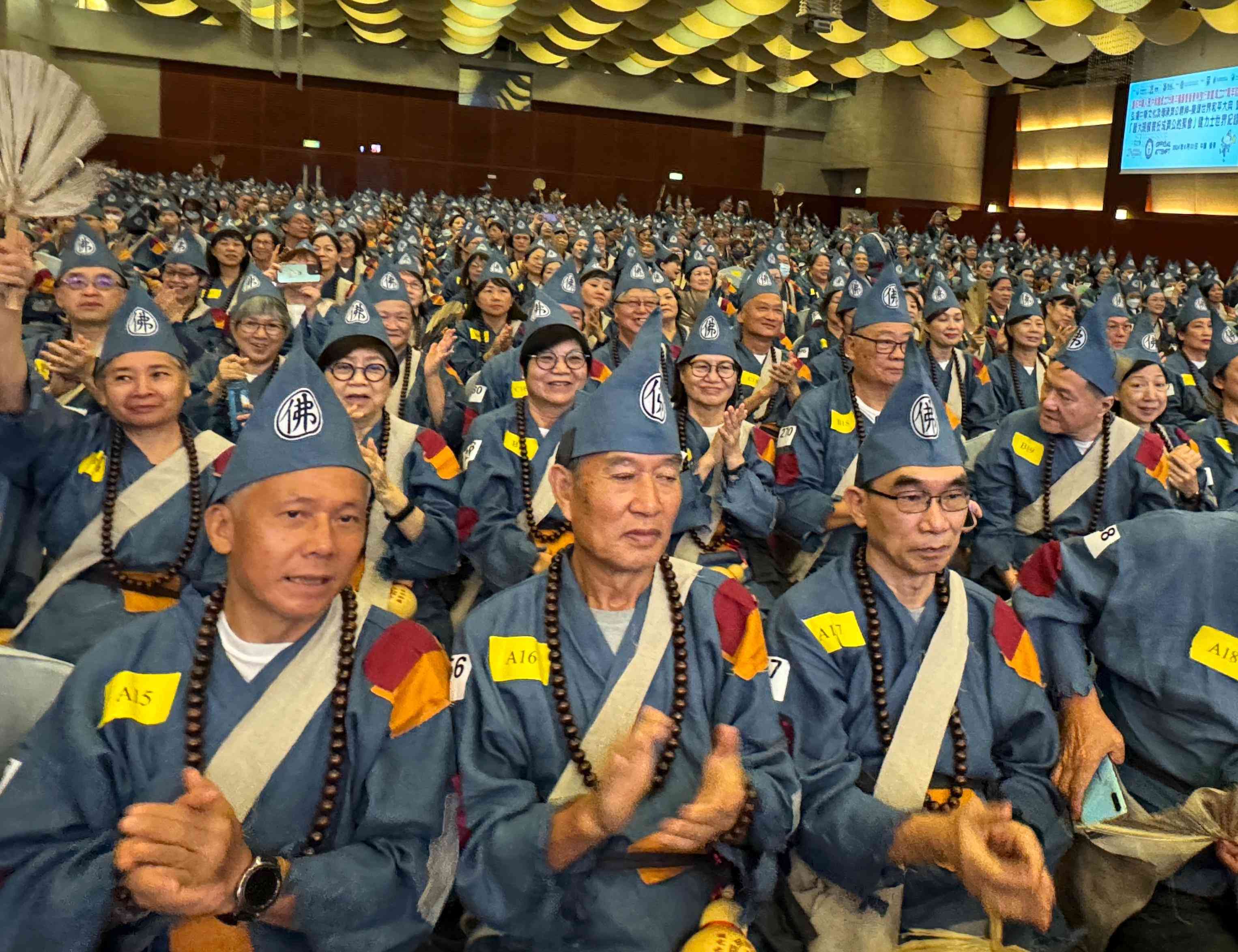


The origin of the folklore of Ji Gong is not unrelated to the merchants of Nanbei Lane. As early as the 1940s, the De Jiao faith, which originated in Chaoshantang, developed an overseas base in Hong Kong. The branch located in Sheung Wan revered Ji Gong as the main altar master, attracting many merchants from Chaoshantang to join, forming a group of believers in the Ji Gong folklore who still hold ceremonies in the Chaoshantang dialect today. The Tai Ping Shan Street Ji Gong Temple, also located in Sheung Wan, is filled with historical artifacts from the last century related to the Ji Gong faith.
From February 28th onwards, the International Ji Gong Culture Association will combine these two aspects of Ji Gong culture and hold a three-day guided tour exhibition titled 'Ji Gong Culture in Hong Kong' at the Sheung Wan Cultural Plaza near Nanbei Lane, with free admission for the public.
This event is sponsored by the Chinese Temples Committee, with support from Tung Wah Group of Hospitals and Tung Sin Tong. The three-day event will feature a variety of activities, with exhibition boards set up to introduce the century-old presence of Ji Gong culture in Hong Kong in detail. In addition to the continuation of the Ji Gong faith in Hong Kong by the De Jiao faith from Chaoshantang, the exhibition will also introduce the Ji Gong Temple in Sheung Wan, managed by Tung Wah Group of Hospitals. The Ji Gong Temple was originally the Kwong Fook I Chi, built in the 1850s. At that time, many Chinese coolies who came to Hong Kong alone passed away, and the hall provided funeral and shrine services for these deceased with no family in the colony, hence the nickname 'Baixing Miao' (People's Temple) by the locals. In 1980, the statue and artifacts of Ji Gong from the original temple in Dai Lung Lane, Wan Chai, were moved to Kwong Fook I Chi, which then became known as the Ji Gong Temple.
The Dai Lung Lane Ji Gong Temple in Wan Chai also has a history of its own. All these incidents related to the Ji Gong faith reflect the social conditions and folk events of Hong Kong in its early development, and the exhibition will introduce them one by one. To enable visitors to have a deeper experience, Tung Wah Group of Hospitals has arranged a guided tour, 'A Journey into the Early History of Chinese in Sheung Wan'. Starting from the exhibition venue, the tour will take participants on a walk to the Ji Gong Temple on Tai Ping Shan Street, passing by Tung Wah Hospital on Shing Wong Street. The Ji Gong Temple houses several cultural relics related to the Ji Gong faith, including the Hu Men (Tiger Gate) used in the early god-contracting ceremonies and a plaque cast in the last year of the Guangxu era, which are extremely valuable collectibles.
Ms. Ji Mei Yan, Chairman of the International Ji Gong Culture Association, said that Ji Gong is a well-known figure in Chinese society who is often first associated with madness and eccentricity. He is usually depicted as wearing ragged clothes, behaving abnormally, and being inseparable from wine and meat, which makes him a monk who does not abide by the Buddhist precepts. However, in ancient times, many high-ranking officials and nobles respectfully referred to him as a saint, and the common people regarded him as a living Buddha. The reason why Ji Gong has been passed down through the ages is entirely due to his spirit of saving the world and guiding people towards kindness. Only good thoughts can stand the test of time, and this value is the core of Ji Gong culture, worth inheriting from generation to generation.
In addition, there will be several booths at the three-day event, such as the 'Xuan Hu Ji Shi' (Suspension of the World) Workshop, providing free stress-relieving experiences, as well as intangible cultural heritage paper-cutting and Chinese bamboo weaving workshops suitable for families and primary and secondary school students. There will also be several literary and artistic performances, as well as a lecture on Ji Gong culture by Dr. Wong Hing Chung. Prior registration is required for the guided tours and some workshops.
Registration Method: Please scan the QR code



































![Shatin New Town Plaza | Over 40,000 sq.ft. of brand new outdoor Sky Garden on 7/F of Shatin New Town Plaza [NTP Sky Garden] Christmas Fantasy Debut](https://img.etnet.com.hk/customcover/event/2025/11/06/06112025_NTPSkyGarden_a008_m.jpeg)




![Central PMQ|Japanese Arts & Crafts Exhibition – Lets the Crafts Bring color to your life [Atelier DENSAN POP UP]](https://img.etnet.com.hk/customcover/event/2025/11/06/06112025_atelier_cover_m.jpg)







![Kwai Fong, Metroplaza | Christmas Floral Extravaganza Illuminate the Sparkling Starlight Explore a Romantic and Beautiful Christmas Metroplaza [Starlit Blush Christmas]](https://img.etnet.com.hk/customcover/event/2025/11/17/17112025_Metroplaza_cover_m.jpg)